
Bringing the evidence into the room.

Building Bridges
When crisis strikes, how can we unlock sustainable financing for agriculture when ground information is limited? This interactive session will explore practical ways that RAAPID uses earth observation, advanced analytics, and decision-support tools to de-risk investment and crowd-in financing, ensuring that support reaches the most vulnerable populations.
Agriculture sits at the center of climate risk, food security, and economic resilience, yet financing decisions are often made with delayed or limited information. Conflict, supply chain disruptions, and natural disasters demand rapid, informed responses when ground data is limited. Innovative data approaches like remote-sensing can fill these critical gaps, turning earth observations into decision-ready agricultural insights for governments, finance, and operational actors. This session will explore how improved agricultural intelligence can strengthen risk assessment, guide adaptation finance, and support faster, more credible responses to agrifood system shocks.
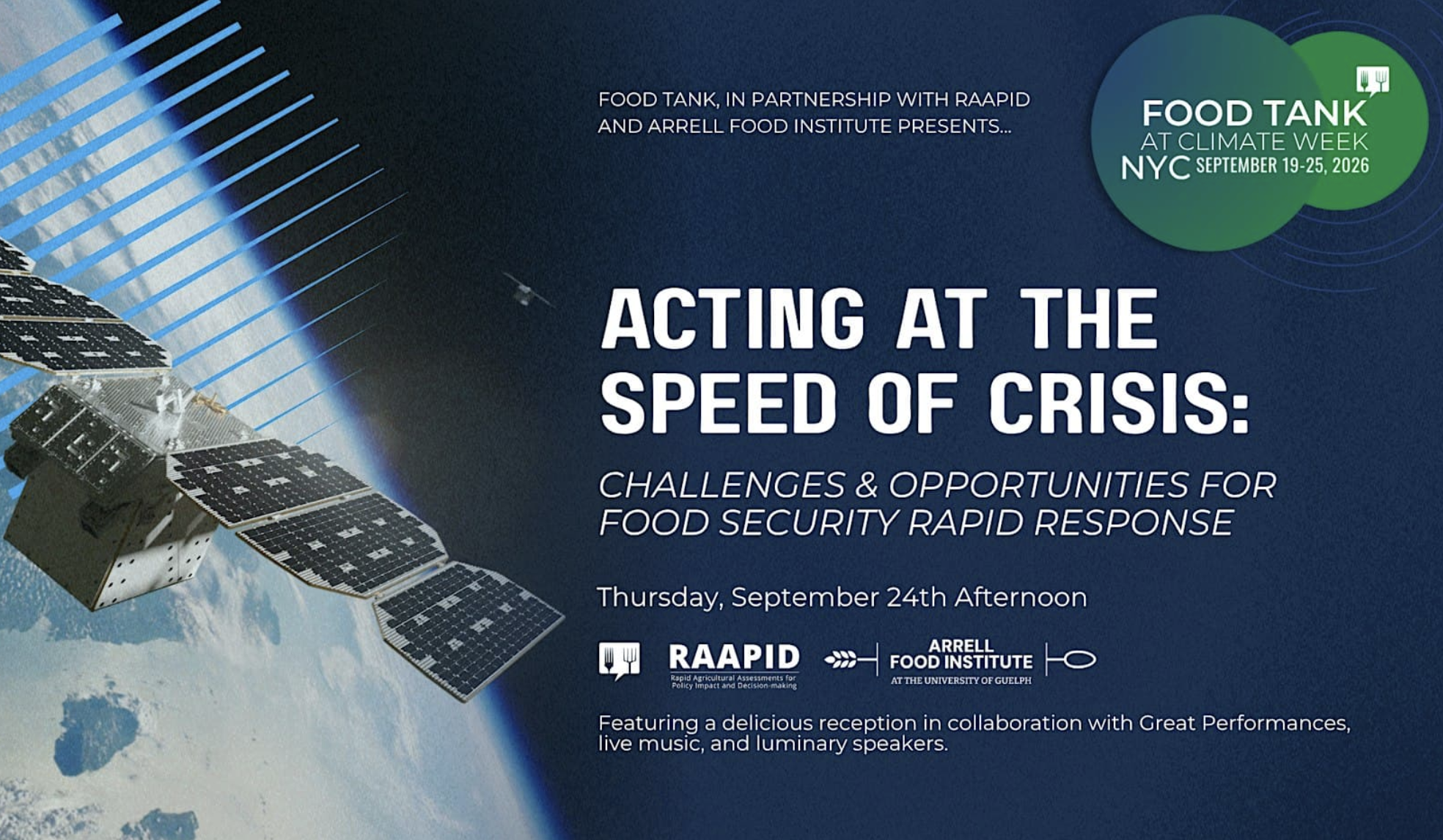
Climate Week NYC: Acting at the Speed of Crisis
As part of Climate Week NYC, Food Tank, RAAPID, and the Arrell Food Institute will convene leaders across sectors to explore how organizations can respond more rapidly and effectively to growing food security challenges driven by conflict, severe weather, supply chain issues, and other global disruptions. The event highlights the importance of collaboration, innovation, and data-driven approaches to building more resilient food systems and enabling faster crisis response.
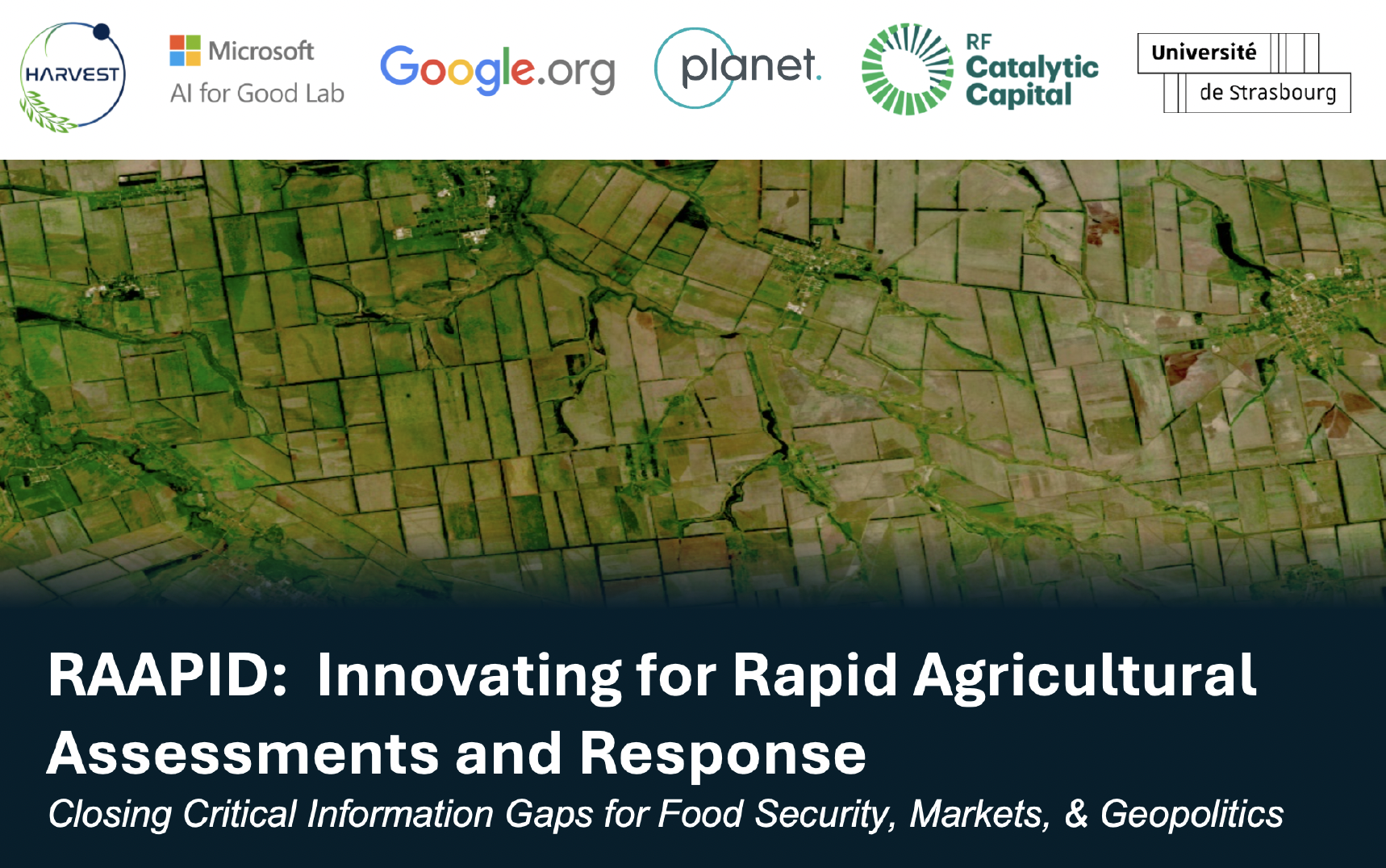
Davos 2026: The RAAPID Roundtable
On the sidelines of Davos, RAAPID convened a closed, senior-level roundtable bringing together leaders from government, humanitarian agencies, philanthropy, and the private sector, alongside partners including NASA Harvest, Microsoft AI for Good, Google.org, Planet, RF Catalytic Capital, and the University of Strasbourg.
One problem kept resurfacing: when food systems are under stress, decisions are made on fragmented, delayed, or incomplete information. The room converged on a single diagnosis. The constraint is not a lack of data, but decision-grade intelligence delivered fast enough to act on. This is not about technology for its own sake. It is about credibility, speed, and trust in high-stakes moments. RAAPID was seen not as a speculative tool, but as a credible evolution of proven capability, and as a way to turn scattered efforts into one shared service for global food security.