
Supply Chain Disruption Response: Strait of Hormuz
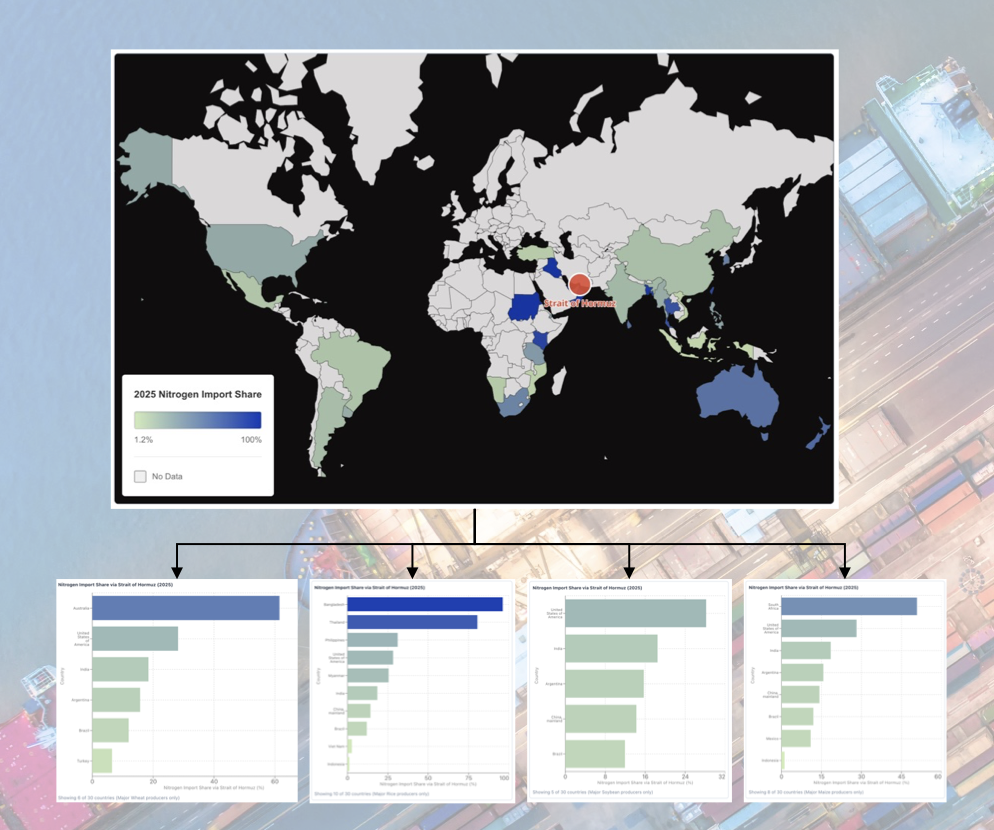
Understanding and assessing how the Iran, U.S., and Israel conflict is disrupting nitrogen fertilizer flows through the Strait of Hormuz is critical, as a significant share of global fertilizer trade depends on this route and disruptions can quickly impact planting decisions and food prices.
Fertilizer costs are rising.
Understanding and assessing how the regional conflict is disrupting nitrogen fertilizer flows through the Strait of Hormuz is critical, as a significant share of global fertilizer trade depends on this route and disruptions can quickly impact planting decisions and food prices.
We are actively monitoring the global agricultural implications of disruptions to nitrogen fertilizer exports transiting the Strait of Hormuz, including identifying the countries and cropping systems most vulnerable to supply constraints and rising fertilizer prices resulting from regional instability. By combining global trade data with satellite-based agricultural monitoring, the team assesses how increased fertilizer costs could affect crop production and food security in major importing countries.
These risks are compounded by broader pressures facing farmers—including elevated energy and transportation costs driven by higher oil prices and the anticipated impacts of a potential super El Niño, which is expected to increase weather-related production risks across many agricultural regions. Together, these converging stressors highlight the need for timely, data-driven intelligence to anticipate agricultural disruptions and support informed policy and market decisions.